Showing posts with label California. Show all posts

Environmental News: Climate change is affecting California's natural resources and wildfire severity.

Report: Climate change is impacting California

Coastal waters off California are getting more acidic. Fall-run chinook salmon populations to the Sacramento River are on the decline. Conifer forests on the lower slopes of the Sierra Nevada have moved to higher elevations over the past half century.

Alicia Chang at: http://twitter.com/SciWriAlicia
LOS ANGELES (AP) -- That's just a snapshot of how climate change is affecting California's natural resources, a report released Thursday found.

"There's certainly reason for concern," said Dan Cayan, a climate scientist at the Scripps Institution of Oceanography who contributed to the report.

The findings are an update to a 2009 report that documented how a warming California is impacting the environment, wildlife and people.

Among the known impacts: 
  • Butterflies in the Central Valley are emerging from hiding earlier in the spring.
  • Glaciers in the Sierra Nevada have shrunk.
  • Spring runoff from snowmelt has declined, affecting Central Valley farmers and hydroelectric plants that rely on snowmelt to produce power.
The latest 258-page report, which cost $282,000 to produce, was compiled from existing climate studies and released by an arm of the California Environmental Protection Agency.

Officials hope it would spur the state and local governments to plan ahead and adapt to a hotter future.

Monitoring should continue "to reduce the impacts of climate change and to prepare for those effects that we cannot avoid," George Alexeeff, head of the state Office of Environmental Health Hazard Assessment, said in an email.

Annual average temperatures across the state have risen by about 1.5 degrees Fahrenheit since 1895, with the greatest warming seen in portions of the Central Valley and Southern California.

Levels of carbon dioxide, methane and other heat-trapping gases in the state increased between 1990 and 2011. In recent years, there has been a slight drop -- the result of industries and vehicles becoming more energy efficient, the report said.

Some of the carbon dioxide in the atmosphere is being absorbed by the ocean, altering its chemistry. Scientists have documented changes to waters at Monterey Bay, which have turned more acidic in recent years, raising concerns about impact to marine life.

Ocean warming, among other factors, may be behind the dramatic drop of chinook salmon in Central California since 2004. And certain plant and animals species -- such as conifers in the Sierra Nevada and small mammals in Yosemite National Park -- have responded to a changing climate by moving to higher ground.

Expect more heat waves, wildfires and higher sea levels as the state warms, the report said.

Read more Cal Fire News »

CA-SRF-Orleans Complex Six Rivers National Forest 16,776 acres - 25%. Growth Potential Extreme, Terrain Difficulty Extreme #CaFire

 CA-SRF-Orleans Complex The Orleans Complex is comprised of two fires, the Butler Fire (new) and the Dance Fire 100% (detected 7/29).

Update 8-19 0900: 16,776 acres - 25% contained.Orleans Complex, Siskiyou County US Forest Service – Six Rivers National Forest 10 miles east of Somes Bar 

Butler Fire update 8/6 0900: 2,800 acres 5% contained.The North Coast Unified Air Quality Management District issued a health advisory for the communities of Hoopa, Willow Creek, Orleans, Forks of Salmon, Burnt Ranch, and Karuk Tribe.

The ICP will be moved in stages beginning today with Operations and concluding on Thursday when Plans and Finance will be moved.

California Team 1 (McGowen) is supporting the logistical needs for resources assigned to the Butler Fire at Nordheimer Campground as well as sharing air resources.

Incident Overview

Community Meeting: A community meeting will be held at the Forks Community Hall, in Forks of Salmon at 7:00 p.m. tonight on Tuesday August 6, 2013.

Health Advisory: The North Coast Unified Air Quality Management District (NCUAQM) continues to extend their smoke advisory for Del Norte, Humboldt and Trinity Counties, noting that there are separate advisories for Forks of Salmon, Klamath Glen, Orleans and Weitchpec. For further information call the 24 hour Air Quality Advisory Information at 1-866-BURN-DAY or check the district’s website at www.ncuaqmd.org.

Butler Fire

 Detected: Wednesday, July 31, 10pmCause: Under Investigation
Fuels: Timber and Brush
Estimated Size: 3,699 acres
Containment: 4%
Committed Resources: Approximately 838
Structures Damaged or Destroyed: 0
Location: Klamath National Forest, approximately 10 miles east of Somes Bar, California.

Closures:
The following closures are in effect,
Going into or being upon National Forest System lands in the area beginning at the intersection of Wooley creek and Highway 93 (county Road 2B01), then continuing northeast along Wooley creek to the intersection with Timothy Gulch, then continuing southeast along Timothy Gulch to the intersection with the Pacific crest Trail, then continuing southeast along but not including the Pacific Crest Trail to the intersection with the Russian Wilderness boundary, then continuing south/southwest along the Russian Wilderness boundary to the intersection with Forest Route 39, then continuing west/northwest along but not including Forest Route 39 to the intersection with Highway 93 (county Road 2B01), then continuing northwest along Highway 93(county Road 2B01) to the starting point, as shown on the attached map.
Oak Bottom Campground
Highway 93 (Forks of Salmon Road) is closed from the east at the Highway 96 intersection and from the west at the Siskiyou County Road yard.
Nordheimer Campground is closed.
The land around the Salmon River is closed 300 feet from the high watermark between the confluence of Wooley Creek and the confluence of Nordheimer Creek.
Summary:
The Butler Fire burned actively until the night time inversion established at approximately 10:00 p.m. Fire continues to back into the community of Butler Flat and around Nordheimer Flat. Protection of residences (and the associated water systems) throughout the river corridor remains a priority.

The fire moved over the proposed southern containment yesterday and is well established in the Hammel Creek drainage and firefighters have begun working on reestablishing fire line from the 1977 Hog Fire and scouting for other contingency lines.

Firefighters continue to work on dozer and handlines on the northern and western fire containment lines. Steep terrain, limited access to the fire, and compromised visibility due to smoke continues to challenge firefighters.

Weather in the fire area today is predicted to be similar to yesterday, with the inversion layer lifting slightly earlier, which could result in increased fire activity.

Please see http://www.inciweb.org/incident/3577/# for updates and a map of the Orleans Complex.

Basic Information
Incident Type Wildfire
Cause Under Investigation
Date of Origin Monday July 29th, 2013 approx. 05:00 PM
Location Near Orleans, California
Incident Commander Johnson
Current Situation
Total Personnel 838
Size 4,276 acres
Percent Contained 4%
Fuels Involved - Timber & Brush
Fire Behavior -
Butler Fire-- The fire actively backed and flanked until the nighttime inversion set in. Frequent rollout with long fingers extending deep into drainages continued to consume heavy fuels under tree canopy setting stage for intense uphill runs.
Dance Fire-- Contained.
Significant Events
The fire burned ares in key drainages below the containment lines slopping over in 2 places yesterday initiating containment line construction plan that will be re-establishing lines from the 1977 Hog fire. Structure defense continued on residences along the river east to Nordheimer. Dozer line construction has progressed on the northern lines. A handline supported by fire hose was established around the Butler Flat community as the fire continues to back into the area. The fire arrived at the Butler Flat control line at 9:35 p.m.
Outlook/Planned Actions Today's actions include continued evaluation and protection of structures in the Hwy 93 corridor. Firefighters will work to prevent fire spread across the Salmon River. South of Nordheimer Flat and Orleans Mountain firefighters will scout and construct control line. Line construction and improvement will continue on the western and northern lines. Firefighters will continue re-establishing existing control lines to the north.
Growth Potential - Extreme
Terrain Difficulty - Extreme
Remarks - The Orleans Complex is comprised of two fires, Dance Fire and Butler Fire. Norcal Team 2 (Johnson) will manage the Orleans Complex as of 6:00 p.m. on August 1, 2013.
The Butler Fire, which started 7/31, is 3,699 acres with 4% containment.
Rolling rocks and burning debris continue to be a safety concern for firefighters on the Butler Fire due to the risk of injury, and the potential for starting fires below the main fire.
Substantial uphill runs are expected today in areas where the tree canopy was dried by large down logs and branches burning overnight. Fire behavior will increase if the hotter and drier weather forecasted for today occurs.

CLOSURES IN EFFECT:

• Going into or being upon National Forest System lands in the area beginning at the intersection of Wooley creek and Highway 93 (county Road 2B01), then continuing northeast along Wooley creek to the intersection with Timothy Gulch, then continuing southeast along Timothy Gulch to the intersection with the Pacific crest Trail, then continuing southeast along but not including the Pacific Crest Trail to the intersection with the Russian Wilderness boundary, then continuing south/southwest along the Russian Wilderness boundary to the intersection with Forest Route 39, then continuing west/northwest along but not including Forest Route 39 to the intersection with Highway 93 (county Road 2B01), then continuing northwest along Highway 93(county Road 2B01) to the starting point, as shown on the attached map.

• Oak Bottom Campground

• Highway 93 (Forks of Salmon Road) is closed from the east at the Highway 96 intersection and from the west at the Siskiyou County Road yard.

• Nordheimer Campground is closed.

• The land around the Salmon River is closed 300 feet from the high watermark between the confluence of Wooley Creek and the confluence of Nordheimer Creek.
Dance Fire (started 7/29) has 100% containment at 577 acres. This fire is now being managed by the Six Rivers National Forest. *Number of Personnel reported on Inciweb for the Orleans Complex will no longer include those assigned to the Dance Fire.

Current Weather
Wind Conditions 13 mph SE
Temperature 96 degrees
Humidity 18%

Fire Information 530/618-2101 (phone line staffed from 8am to 8pm)
---------------------------------------------

CANG: California, Oregon and Washington Governors Request National Guard Stryker Brigade "As a community-based force" #CaArmy #CaNG #CaPublicSafety

West Coast states appeal for National Guard Stryker brigade

Courtesy story
Click photo for screen-resolution imageSome western state governors have requested conversion from tanks to Stryker brigades for their National Guard units. Here, U.S. Army troops with 1st Squadron, Combined Task Force Dragoon, occupy a security position in a Stryker vehicle July 20, 2013 at Zangabad, Afghanistan. (U.S. Army Photo by Spc. Joshua Edwards)
open link in new windowdownload hi-res photo
SACRAMENTO (7/26/13) - The governors and National Guard leaders from California, Oregon and Washington this week sent a letter to national defense leaders, urging them to convert the Army National Guard"s 81st Armored Brigade Combat Team, with units in Washington and California, to a Stryker armored vehicle brigade.
Replacing the unit"s tanks with Stryker vehicles would provide the states" National Guard forces with highly advanced, flexible vehicles suited for deployment during state and regional emergencies.
"As a community-based force, responding to emergencies at home is at the core of the National Guard mission," said Maj. Gen. David S. Baldwin, adjutant general for the California National Guard. "Transitioning to a Stryker brigade would empower us to respond more effectively during domestic emergencies, both natural and man-made."
As soldiers return from combat tours overseas, the Department of Defense (DoD) is also bringing home vehicles and equipment that have yet to be assigned to military installations.
In their letter, the governors and adjutants general emphasized that assigning returning Strykers to the National Guard would eliminate the need for the active duty Army to store and maintain the vehicles as well as provide for easier access for homeland defense and overseas wartime missions - all at a lower cost to taxpayers.
A recent two-year DoD report to Congress stressed the remarkable cost-effectiveness in utilizing the National Guard and Reserves as opposed to their active duty counterparts in carrying out national security operations.
"The 81st currently uses old tanks that are too heavy to use on our roads during emergencies," said Washington Gov. Jay Inslee. "By converting the 81st to a Stryker brigade, and supplying this unit with newer, more modern equipment, we achieve a double win. Our National Guards would have an enhanced ability to respond to local and regional emergencies like floods, fires and earthquakes. Additionally, a conversion would position this equipment closer to the Asia-Pacific Region, where the U.S. military is placing a heavier focus."
At present, there is only one Stryker brigade in the National Guard, located in Pennsylvania.
Converting the 81st to a Stryker mission would allow for close alignment with the Stryker Brigade Center of Excellence at Washington"s Joint Base Lewis-McChord, California"s National Training Center at Fort Irwin and Oregon"s Umatilla/Boardman Training Complex.
---------------------------------------------

#UCCE Oaks of the Central Sierra: Care & Prevention Workshop Saturday, August 24 #CaOaks #CaParks #CaFire

UCCE: Oaks of the Central Sierra: Care & Prevention Workshop

Date: July 23, 2013

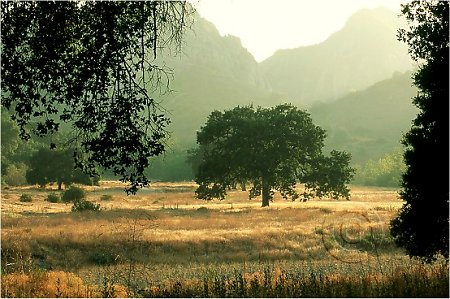
Oak trees identify California landscapes. Approaching the Sierra foothills, dark green bands of blue oaks interspersed with golden grasses on the rolling hillsides announce the transition into the mountains.

Oaks have been removed to create pasture, to shore up mines, and to create housing developments. Due to competition with non-native ground covers and with pressure from grazing, many types of oaks are not regenerating (creating viable, long-lived oak seedlings) in the wild. People kill old, long-established oaks by planting shade plants under them and watering them all summer long, creating fungal diseases that will kill oaks. Sometimes, people who plan to develop their property in the future will remove oaks in an effort to avoid having to pay mitigation for the removal of large trees.

It's been demonstrated in studies that oak trees increase property values. Living next to open space containing oaks also increases property values. All California oaks are very well adapted to the elevations where they occur naturally and provide the backbone for "right plant/right place" landscaping that reduces the need for extra irrigation and fertilizer.

UCCE Central Sierra, with funding from the Renewable Resources Extension Act, presents a free public workshop on Saturday, August 24 to discuss the value of oaks and oak woodlands, the threats to California native oaks, and ways to help preserve and care for them, whether you live on a small city lot or a large ranch. 
The workshop will be held from 10 a.m. - 12 p.m. at the UC Cooperative Extension Office, 12200-B Airport Road in Jackson, California. To register for the workshop, call 530-621-5528. Pre-registration is not required.

Contact: Rebecca Miller-Cripps Phone #209-553-6993
Photo Credit: www.californiapictures.com

---------------------------------------------
    CFN - California Fire News 2013 
 -